Categories
jazz music performances releases United States

Singer-songwriter ABIAH premieres “September” music video exclusively on The Revivalist

Today, critically acclaimed singer-songwriter ABIAH premieres his new music video for “September” exclusively on The Revivalist. Showcasing the lead single on his new release, Life as a Ballad (available on Madoh Music, distributed via Purpose Music Group/eOne), the video was shot at Dead Horse Bay in New York and directed by Scott Gordon Bleicher. The debut comes less than two weeks before major performances for ABIAH in the Northeast supporting the project: opening for The Robert Glasper Experiment at The Birchmere in Alexandria, Va., on Oct. 11 and an album release performance at Le Poisson Rouge in New York City on Oct. 15.

Ever since the untimely departure of Luther Vandross, the American pop scene has been absent of a Black American male balladeer possessed of chops beyond belief, staunch lyricism and emotional maturity. ABIAH (pronounced Ah-bee-yah) more than adequately answers the call of that absence with an album and a presence that is sensuous, soulful, honest, grown-up and quite passionate about restoring vocal excellence to the contemporary airwaves.

Who is ABIAH? These are the bare facts: he is a seasoned balladeer possessed of a five-and a half octave range; an established vocal coach and former Universal Republic recording artist; and he is of Ghanaian, Cuban, Native American descent, though raised in Rochester, NY.

While that background remains a part of his roots and identity, 2012 marks a musical, professional and personal evolution for the singer-songwriter. Previously known as “Jeremiah” in the music world (full name Jeremiah Abiah, the latter of which means ‘God is my father’), Abiah sets forth his highly anticipated sophomore album, Life as a Ballad, reflective of a long journey towards his intensely personal sound and overall musical growth – consisting of nine self-penned originals.

“There was a moment when I thought I had lost my voice. “I was experiencing growing pains which were hard to decipher at first, but eventually they helped me to trust my heart, sound and aesthetic again. I thought I would never record again. I even toyed with the idea but the music perpetually tugged at me. Changing my stage name was the impetus of a new beginning,”  says ABIAH in a news release. “This is how Life as a Ballad was born as I dealt with the idea of finding beauty in the dark, that glimmer of light when all hope seemed lost.”

A move to New York City in the early 2000s saw ABIAH “hitting the pavement hard” and eventually playing Central Park SummerStage and the world renowned Blue Note on a regular basis; though a turning point came when ABIAH started gaining the attention of major labels. As is frequently the case for ambitious but not yet quite industry-savvy young artists, ABIAH’s fledgling recordings fell through the cracks. An entire album, brought to the verge of a major label deal, got shelved because the song the major label executives favored most was the only one not produced by a very major and deservedly much lauded producer.

“I’m not opposed to major labels. I just believe an artist needs to keep his finger on the pulse of everything. It’s hard to be artist and business, but it is necessary,” says ABIAH. “Initially I was angry and came out pointing fingers, but the healthier aspect became, what did or didn’t I do? Taking that responsibility has given me power and greater perspective.”

While plotting his next round of moves, creatively and professionally (following his major label departure) ABIAH got practically handed an unexpected cottage industry, when he became an in-demand vocal coach, even featured on MTV’s program, MADE. Initial inquiries from singer-friends impressed by his sound and range has blossomed into a side-business that finds him coaching up-and-comers prepping for demos and showcases, solid pros hankering to rise up to that proverbial next level, and musical game show contestants hoping to impress celebrity judges with noticeably increased prowess.

This recording is the result of ABIAH’s steady and patient march over a decade in New York, finding the perfect songs and session mates to support his vision. Like any astute young artist in pursuit of a unique bespoke career path, ABIAH wisely sought out collaborators who were of highly skilled and veteran pedigrees, and of course, simpatico. Notable among those collaborators are very well regarded young pianist Robert Glasper, who is ABIAH’s cousin who he met in earlier days while they cut their musical teeth in the New York’s music landscape. Marvin Sewell, the album’s stellar guitarist, has been a frequent flyer in Cassandra Wilson’s ensemble since the late 1990s as well as Jack DeJohnette.

Ultimately, Life as a Ballad designates ABIAH as a contender for that sizable niche slice of today’s market known as Adult Contemporary – the same slice where equally well-honed, melodious and crafty modern male vocalists like Michael Bublé, Jason Mraz, Sting, Seal and occasionally even Robin Thicke are seen to reside.
Categories
arts jazz music performances releases United States world

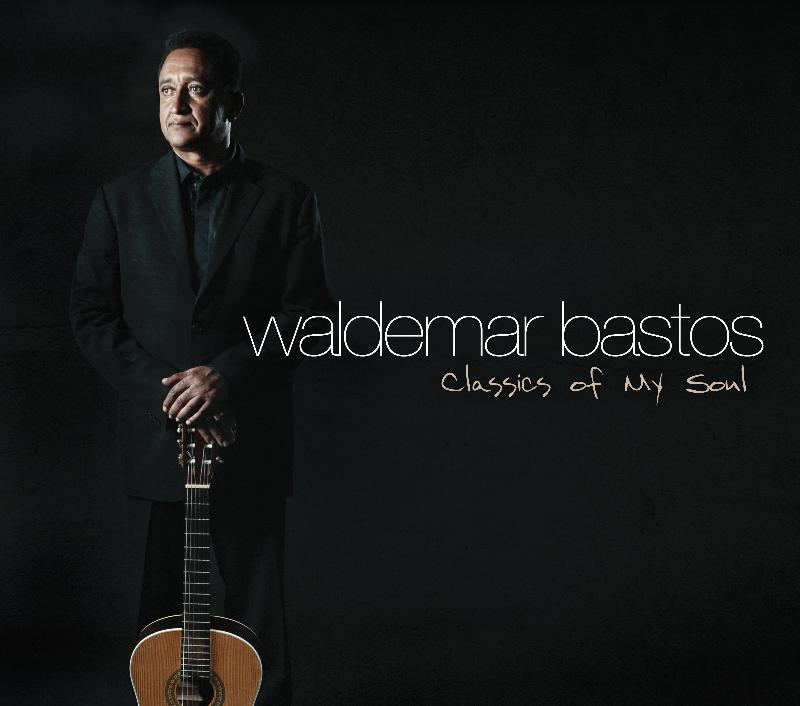
Singer/guitarist Waldemar Bastos releases sixth studio album, “Classics of My Soul”

Renowned world musician Waldemar Bastos‘ sixth studio album, Classics of My Soul, was released in the U.S. on Sept. 11. The record, which was produced by Derek Nakamato and features players such as percussionist Luis Conte, guitarist Mitchell Long and pianist Keiko Matsui among others in support of Bastos’ acoustic guitar and singing, was released in his native Angola in 2010. Recorded in Los Angeles and London, Classics of My Soul now returns to the shores where it was crafted.

 “The new album has a different sound,” says Bastos in a news release. “I believe that we are in a moment of Peace in Angola, the first steps of democracy, and this of course fulfills your spirit with joy. It also reflects itself in the music and the music is the reflection of my state of mind. All these ingredients made the album more profound and cheerful.”

Nakamato, who Bastos met while working on the U2 Tribute album, In the Name of Love – Africa Celebrates U2, said, “After many conversations with Waldemar, we decided the foundation of this record would be his voice and unique acoustic guitar playing. After we recorded all of the basic tracks and lead vocals, my role as producer was simply to listen to what the music needed. It was important to Waldemar that this project would take place without a record company or any person that would have influence on the music or its direction. My commitment to him was that this was to be ‘his record.’ With his distinguished career and numerous recordings, I clearly sensed that there was something more he wished to achieve with this project.

Waldemar remarked to me that these songs presented on Classics of My Soul are very special and close to his heart, even more important treasures to the people of Angola. This album was to celebrate their spirit and not his ego. I remember an instance where he sang a vocal that astounded us in the room and upon listening to it on playback, Waldemar looked at me and said, ‘No, the performance is too much about me and the song IS NOT about me. Let me do it again.’ With a very subtle shift the emotion of the song reflected the lyric and not the dramatic performances of ‘singer.’ His intent always was very clear.”

Among the host of musicians chosen to take part in the album, Bastos and Nakamato also went to London where, with the help of conductor Nick Ingman, they recorded the London Symphony Orchestra for four of the album’s tracks. Bastos says, “my music is defined by my own life experiences, praise for Angolan identity, and a call for universal brotherhood. It is gratifying for me to hear critics say, as it recently happened in the USA, that my music is universal. That it is not a regional music, but instead for people everywhere.”

Waldemar Bastos was born near the border with Zaire in N’Banza Congo, a little town which was the first capital city of the ancient kingdom of Angola. He started singing at a very early age. Bastos describes his musical childhood as such, “When I was a child, my mother soon realized I had a very special musical gift. I used to spend my days singing and whistling, and my mother noticed that as something out of the ordinary… and she gave me all her support. One day, my father arrived home and found me playing his concertina. I felt bad for having been caught touching, without permission, an instrument which was almost sacred for him. But he was pleasantly surprised, I think he was even satisfied, to hear me playing popular radio songs. In the following Christmas he gave an accordion as a gift.” From there, Bastos would dedicate himself wholeheartedly to music, traveling around Angola and playing everything from pop and rock to waltzes and tangos.

In the meantime, Angola won its independence and followed the long socialist road. Feeling burdened by the repressing role of the government in the arts, Bastos defected to Portugal in 1982 and later to Berlin and from thereto Brazil, where he became acquainted with some well-known musicians, such as Chico Buarque, João do Vale, Elba Ramalho, Djavan and Clara Nunes who had been in Angola in the late ’70s. Bastos’ career bloomed during his time away from his homeland. His debut, Estamos Juntos, was released by EMI-Odeon while the musician lived and worked in Brazil, with the acclaimed sophomore release, Angola Minha Namorada, following in 1990 when Bastos had returned to Portugal.

All the while the musician continued to be in the Angolan spotlight. In 1990, he gave a memorable concert to an audience of 200,000 in Luanda’s Kinaxixe Square and returned two years later on the heels of his third album, Pitanga Madura. Bastos says, “given the fact that an effervescent historical moment was taking place, if, on the one hand, these circumstances brought me joy, on the other hand, I felt great apprehension because of the way I was being claimed by both sides. The situation became, again, dangerous for me, and I understood it was not the right moment to stay in Angola.”

While travelling through Lisbon, David Byrne, the mastermind of Luaka Bop record label, and ex-leader of the Talking Heads, bought, by chance, a record of the Angolan singer in a downtown Lisbon shop. Soon after that, Bastos would be featured on the album Afropea – Telling Stories to the Sea, an anthology of Lusophone artists issued by Luaka Bop. Afterwards there was Pretaluz/Blacklight, recorded in New York City, produced by Arto Lindsay, and issued by Luaka Bop. The New York Times described it as “one of the best World music records of the decade” and was included in Tom Moon’s book 1000 Recordings to Hear Before You Die. In the aftermath of Pretaluz/Blacklight, Bastos won the “Award for the Emerging Artist of the Year (1999)”.

 In 1998, Bastos was discovered by the European audience and media after his successful tours in Europe as the opening act at the UNESCO Festival “Don’t forget Africa” in June 2000 in the Canary Islands. Later in the year, he was invited by Mr. Ruichi Sakamoto to take part in the Zero Landmine project in cooperation with international artists like Arto Lindsay, Brian Eno, David Sylvian, Jacques Morelenbaum. Other accomplishments include three of his compositions being featured in the Hollywood movie, The Sweepers. He has also received several invitations by Monacan royalty Prince Ernst August von Hanover and Princess Caroline von Hanover in the course of which he also gave a private concert for Rainier III. In 2003 the Angolan war ended after 30 years and Bastos was invited to celebrate this very special day in a remarkable performance in the national stadium in Luanda.

 “The message of the new album is the congregation of beauty, love, fraternity and to unite the people through music,” says Bastos. “For me the music has the function of breaking barriers and helping to create a better world, that is what I believe.”

Categories
jazz music performances releases United States

Jazz historian Gary Carner journeys forth with Pepper Adams’ “Joy Road”

How do you bring attention to the compositional genius of a jazz artist, who, though internationally beloved by colleagues as one of the greatest baritone saxophonists to ever live, has been marginalized by history books and ignored as a composer? That, in sum, presents the quixotic challenge taken on by Gary Carner with his digital box set, JOY ROAD: The Complete Works of Pepper Adams (Volumes 1-5), available now from Motéma Music, and his exhaustively researched book, Pepper Adams’ Joy Road: An Annotated Discography, out simultaneously from Scarecrow Press.

In connection with these two grand undertakings, Motéma will also release two physical CDs: a stand-alone version of Volume 5, I Carry Your Heart: Alexis Cole Sings Pepper Adams, singled out because it documents the first-ever versions of Adams’ music to be paired with lyrics; and the JOY ROAD SAMPLER, a CD of highlights from the digital box set that shall be made available  in stores and online.

Via Carner’s new literary and musical JOY ROAD offerings, the world will get a fresh and unbridled take on this musical giant. Pepper Adams (1930-1986) “was loved by everyone in the industry,” says Carner, a noted jazz historian, as well as the owner of the gourmet wine brokerage, Sommelier Direct, LLC in a news release. “The fact that he allowed me into his confidence back in the 1980’s,” says Carner, “opened my entire life, my entire world into the jazz community.” After meeting in 1984, the two became close friends, with Carner doing extensive interviews to help Adams write his autobiography. Sadly, in 1986, Adams was cut down in his prime by cancer. In the wake of his loss, Carner’s literary intentions were forced to take a turn, resulting in the annotated discography eventually released by Scarecrow this August, as well as a full-length biography that is still in the works.

Pepper book cover “Days before Adams died,” Carner explains, “pianist Tommy Flanagan, Pepper’s closest friend, was by his bedside. He later told me that Pepper weakly motioned toward my unfinished manuscript on thenightstand, as if to say ‘please make sure my legacy gets out there.’ When I heard that story,” Carner continues, “I knew I had to finish this work. The guy was an absolute genius as a musician, as a stylist, and as a composer… incredible! I needed to let the world know about those three things, especially the compositions.”

Now, 28 years after meeting Adams, Carner’s labor of love is complete. But what about the amazing Pepper compositions that Carner discovered along the way, mostly on out-of-print discs? The only way to introduce the world to all 43 tunes as a collection would be to produce contemporary recordings of the Adams songbook — a passionate undertaking, to say the least.

Carner chose to highlight the versatility of Adams’ compositions by placing the music in different settings. He engaged Chicago pianist Jeremy Kahn to record Volume 1 in a trio format. Next, Carner tapped the fine Atlanta-based pianist Kevin Bales to assemble a quartet for Volume 2 with guitarist Barry Greene featured. New York based baritone sax man, Frank Basile, presides over a sextet for Volume 3; and for Volume 4, Carner brought Kahn back with his trio and special guest, Gary Smulyan, who is Adams’ chief acolyte and was just voted Baritone Saxophonist of the Year for 2012 by the Jazz Journalists Association.

With Volumes 1-4, the 43-composition oeuvre was complete, but Carner had one more mission to fulfill. He had heard of Pepper’s unfulfilled wish to have lyrics set to his seven ballads. So, for the vital fifth volume, Carner engaged poet Barry Wallenstein (one of his literary mentors) to pen original lyrics. Award-winning vocalist and one of five finalists in this year’s Sarah Vaughan International Vocal Competition, Alexis Cole (also a Motéma artist), performs on this session, arranged and led by Jeremy Kahn, with both Eric Alexanderand Pat LaBarbera featured on tenor saxes.

The fifth volume completes Carner’s massive tribute on a highly original note. Resetting Adams’ seven ballads in different tempos and styles, and pairing them with Wallenstein’s richly literary lyrics, serves as an especially fitting tribute to the creative, witty, well-read jazz legend who had named many of his compositions after famous literary works, such as “Lovers of Their Time”. The songs also add seven luscious new additions to the vocal jazz canon.

Carner’s historically detailed liner notes provide important career facts about the barigiant, who played with virtually every major jazz legend. There are also amusing anecdotes about the genesis of each song in the collection. The JOY ROAD SAMPLER includes an abridged version of the notes from the Complete Works set.

Gary CarnerTo launch his new book and music offerings, Carner has collaborated with Motéma to co-opt his regularly scheduled Sommelier Direct fall wine sales route, and turn it into a 30-city JOY ROAD release tour, in which he will preside over book and CD signings; emcee live music performances of Pepper’s music; do radio publicity stops; and give college lectures… with wine tastings all along the way!

Live music highlights on the tour include: Jeremy Kahn performing Pepper Adams at The Chicago Jazz Festival (Sept. 2); the star-studded PEPPER ADAMS JOY ROAD CELEBRATION NYC (Sept. 24 -30); an Adams’ birthday celebration led by Pat LaBarbera in Toronto (10/6), and a Pepper Adams week in Los Angeles featuring Gary Smulyan, Dale Fielder, and Eric Reed.

The New York City week is the most lavish. It kicks off with special big-band charts which will honor Pepper Adams, performed by the Grammy-winning Vanguard Jazz Orchestra (in which Adams once held the baritone chair); there is an Alexis Cole CD release at Smoke (Sept. 26); a spectacular performance dubbed “The Three Baris” at Ginny’s Supper Club in Harlem (Sept. 29) – The Three Baris are: Frank Basile, Ronnie Cuber, and Gary Smulyan. They will be backed by famed Pepper Adams’ collaborators, George Mraz (bass), Don Friedman (piano) and Kenny Washington (drums). And, to top off the Pepper feast, Birdland Jazz Club will present new Bevan Manson string quartet arrangements of Adams’ ballads; a tribute to Pepper by world renowned composer David Amram; and on that double-billed evening, a special feature with Arturo O’Farrill and Lew Tabackin.

Categories
arts jazz music performances releases world

Guitarist Albare assembles super group iTD for “Long Way”

In 2011, Albert Dadon (Albare) came to the attention of Matthias Winckelmann, founder of prestigious German jazz label enja Records. Their mutual esteem led to the recording of a new project, Long Way. The project will be released on Oct. 9 in the U.S. Produced by Winckelmann at his favorite Brooklyn studio, Studio Two, the album is a collaboration by some of the world’s finest musicians including triple GRAMMY Award-winning drummer Antonio Sanchez (Pat Metheny Group), saxophonist George Garzone (the Joe Lovano Nonet), pianist Leo Genovese (Esperanza Spalding), prolific harmonica player Hendrick Meurkens and Albare’s long time musical collaborator, bassist and composer, Evri (Evripedes Evripidou).

Albare calls this super group iTD, or the International Travel Diary, to reflect both their cosmopolitan backgrounds and their global aspirations. The music they create is sophisticated, masterfully played, with a sunny disposition that belies the depth and complexity of the compositions. Winckelmann describes it as, “a surprising, truly rewarding album” and the producer of albums by Chet Baker, Abdullah Ibrahim and many others should know.

When Albare first met Winckelmann, the two agreed upon Sanchez and Meurkens for the recording. The guitarist brought Sanchez to Melbourne in 2007 to play with Chick Corea at the festival he was directing, and was confident he was the right player for the album. As for Meurkens, Albare had yet to meet the musician, but had watched video footage of him playing and says in a news release, “he was exactly the kind of player I had in mind for this project.”

The guitarist met Garzone in Australia at Monash University School of Music. Albare says, “One day George came to have lunch at my home and when I told him that I was doing a project for Enja he said, ‘man, I want to do this with you.’ Of course, I was delighted to accept his involvement, I love his sound. He asked me who I would have on piano and I said, ‘no piano thanks.’ George knew instantly where I was coming from, as we both suffered the tortures of piano players. George said, ‘man do I have the guy for you!’  He then went on describing this Argentinian player, and I have to say that I am so happy I listened to Garzone’s advice. Leo is a pleasure to be with on and off the stage.”

The band never met, never rehearsed, until the day they met at Studio Two in Brooklyn. “After a few hours of setting up the sound, we took our instruments and started with ‘Cut to the Chase,'” says Albare. “After a few minutes we did a first take and it sounded good. We tried a second one, and it was magic. This is the take you can hear as the first track in the album. The rest of the sessions followed the same pattern. I can honestly say that when I walked in that morning, I didn’t know what to expect. I knew I was dealing with great musicians, and I was confident about the material Evri and I had composed but the magic doesn’t always happen, so I went in with no expectations. I feel humble and grateful.”

Born in Morocco, Albare’s influences are varied and global in the true meaning of the word. He grew up in Israel and France and thanks to these international origins, is fluent in French, English, Hebrew and Spanish. At the age of 27, he migrated to Australia where he first became known musically, at the forefront of the then burgeoning Acid Jazz scene, recording a string of albums for the Festival label.

He has performed internationally with his band using the nom de guerre Albare (the phonetic spelling of his given name) and produced A History of Standard Time, for Australian pianist Joe Chindamo featuring legendary bassist Ray Brown.

Always immersed in the arts, from 2003 to 2005 Albare was Chairman of the Melbourne Jazz Festival. In 2005 he brought the Umbria Jazz Festival to Melbourne. Umbria Jazz Melbourne ’05 attracted 135,000 visitors under the artistic direction of Carlo Pagnotta. In 2006 the organization appointed Albare to become the new Director of the Festival and take the artistic lead. When he took the helm it was renamed the Festival of Melbourne Jazz and the 2007 edition enjoyed the presence of more than 200 artists from around the world, performing across 10 venues, in 112 concerts during its 10 days, including Herbie Hancock, Chick Corea, Gary Burton and McCoy Tyner.

In 2003 the guitarist also founded the Australian Jazz “Bell” Awards (named after Australian legend and patron of the event pianist Graeme Bell, AO, MBE) and chairs the board of The Australian Jazz Awards (a not-for-profit arts organization). The Bells are the only jazz awards in Australia and recognize the achievements of up-and-coming and established Australian jazz performers and composers. In 2008 Dadon received an Order of Australia (AM) for service to the arts, particularly for his work with the Melbourne Jazz Festival.

http://www.youtube.com/watch?v=iqaNHa81Tx4

Categories
arts jazz music performances releases world

Producer Rio Sakairi pays tribute to Japanese earthquake/tsunami victims with project

“Call me romantic, but I believe in the power of music and its ability to heal and uplift,” said Rio Sakairi, director of Programming at The Jazz Gallery, an internationally recognized breeding ground for young musical talent in New York City in a news release. It is this sentiment that inspired her into action, when a 9.0-magnitude earthquake struck off the coast of Japan on March 11, 2011. Marking one of the worst natural disasters on record, the earthquake spawned devastating tsunamis and a subsequent nuclear crisis. The insurmountable destruction claimed tens of thousands of lives, and the world watched in horror. For Sakairi, it was more than an unfathomable tragedy; it literally hit home.

Born and raised in Tsuchiura, Ibaraki – just two hundred miles from the severely ravaged Sendai area – Sakairi was inspired immediately into action. She called upon an esteemed roster of friends and colleagues within the thriving jazz scene, and they came together to create a gift to those who suffered such incredible loss. HOME – Gift of Music is an eight-song manifesto of hope from some of today’s most innovative musicians in jazz and beyond, including Gretchen Parlato, Doug Wamble, Becca Stevens, Alan Hampton, John Ellis and Claudia Acuña. Scheduled for release on September 11, 2012, on Sunnyside Records, the singer-songwriter leaning repertoire captures the huge emotive capacity of the artists, with an intimacy as personal as a love letter. The fullness of their hearts is evidenced by the immediacy with which they were able to unlock their overflowing expression of compassion, empathy and, ultimately, optimism.

Sakairi’s reputation as a concert producer has placed her among the most influential figures in the jazz field. Her creative ideas, understanding of new trends, track record of discovering and nurturing new talent, and impeccable artistic standards have captured the attention of such seasoned experts as George Wein. Now stepping out as a record producer, Sakairi demonstrates her musical sensibilities and convictions as a philanthropist.

The musical and social camaraderie that Sakairi has so uniquely fostered over the last twelve years at The Jazz Gallery undoubtedly came into play during the recording. The artists donated their time and talents, penning personal songs specifically for this project. All proceeds from HOME – Gift of Music will go to Habitat for Humanity Japan, where volunteers are working tirelessly to rebuild homes for those affected. Studio time, engineering, artwork, graphic design, distribution, marketing and PR services were also generously donated.

“All of the songs were written with very short notice and there was no rehearsal,” says Sakairi. “It’s pretty magical the way everything came together. It was all done in just one or two takes.”

Sakairi’s mentoring skills proved instrumental, pushing artists not only beyond the jazz realm, but for some, out of their comfort zones; most notably with the contribution of the multi-reedist John Ellis, who makes his debut as a vocalist on the pensively assuring title track.

“I just knew he could do it,” says Sakairi, who has commissioned Ellis three times for The Jazz Gallery’s notable commissioning program. “Every time I push him, he rises to the challenge, delivering results above and beyond my expectations. It turned out to be great, exactly as I thought it would.”

In the age of the five-minute attention span, and in a world with no shortage of catastrophes, Sakairi is working hard to remind everyone that, although the tragedy in Japan may not make the front page today, people are still hurting and the road to recovery is long and difficult. HOME – Gift of Music is a testament to the enduring spirit of the people of her native homeland, and to the ability of music to leave an ineradicable impact.

“Action is how we show that we love and we care,” says Sakairi. “Action is the only way to combat helplessness. I took on this task because this is my home.”

Categories
jazz music releases

Motherhood generates Elizabeth Shepherd’s release “Rewind”

“Rewind” is available September 25 on Linus Entertainment.

Montreal-based soul-jazz innovator Elizabeth Shepherd has been praised around the world for her song-writing chops, but on her fourth studio album, Rewind, the pianist and vocalist showcases her skills as an arranger and interpreter, breathing new life – and soul – into songs both familiar and forgotten.

A two-time JUNO nominee (Canada’s Grammy Award equivalent) and critical darling, Elizabeth Shepherd’s genre-bending, soulful jazz has helped her find her place as a mainstay on the international circuit, playing legendary venues like Tokyo’s Cotton Club, London’s Jazz Café and the Hollywood Bowl. Her debut album, Start to Move, continues to receive critical acclaim, and was voted the Top 3 Jazz Albums of the Year by the listeners of the Gilles Peterson Show on BBC Radio 1 in 2006.

As her first full-length album of standards, Rewind charts new and welcome territory for Shepherd, who pushes the boundaries of what is considered conventional jazz, all the while creating a sound completely her own.

Raised by ministers of the Salvation Army, an early exposure to the brass band sounds mixed with her love for classical and house music, funk and hip hop, lay the foundations for one soulful musician. Trained extensively in conservatories in Canada and France, Shepherd completed a degree in jazz piano from McGill University, Montreal. Initially entering the music program to pursue a career in music therapy she quickly discovered her extensive talent in songwriting and performing. She moved to Toronto in 2004 and worked as a server at a piano bar. Her serving job proved an asset to her musical career – once management realized Shepherd’s talent, she quickly became the restaurant’s key entertainer. Organically and innocently enough, the Elizabeth Shepherd Trio was formed with Scott Kemp on bass and Colin Kingsmore on drums. Within a year of trading her waitress uniform for a piano bench in 2006, Shepherd was appearing live on BBC Radio 1, playing sold-out shows at London’s Jazz Café and doing a weeklong residency at the venerable Cotton Club in Tokyo.

On her 2008 follow-up, Parkdale, which garnered another JUNO nomination, Shepherd continued to carve out her own niche within the jazz idiom, drawing praise from peers and critics. The ensuing tours saw her sharing the stage with greats like Branford Marsalis, Christian McBride and Victor Wooten. Shepherd’s 2010 release, Heavy Falls the Night, marked her debut as a producer and the record was hailed by jazz and pop critics alike as her best to date. Long-listed for Canada’s most prestigious music award, The Polaris Prize, the album builds a bridge between jazz and sophisticated pop music. Shepherd spent the better part of 14 months touring the record internationally, selling out legendary jazz clubs while climbing high on pop charts.

The vocalist didn’t consider recording an album of standards until she became pregnant with her daughter Sanna while on the last leg of her 14-month tour supporting Heavy Falls The Night. Faced with the realization that she would not be able to finish writing enough original new songs for an album before Sanna’s birth, Shepherd was compelled to get into the studio and record an album of songs that she had learned, loved and grown with over the years. She wanted desperately to connect with something that was always a constant in her life while she was in the midst of what is arguably the most significant life change a woman will ever have — motherhood. After the album was finished and Sanna entered her life, Shepherd realized that Rewind too, ironically, marked a great shift for her musically.

“Now that the album is done, I realize that while pregnancy is a time of unprecedented, extreme change, and motherhood an even deeper process of adaptation, the illusion of holding onto something fixed is just that – illusion – because we are never really standing still, and so this album is not that link that I was hoping for when initially faced with so much change – rather it is one more face of change, an act of discovering and embracing yet another aspect of my self, this time of my musical self,” said Shepherd in a news release.

So while Rewind was a record initially inspired by Shepherd’s desire to connect to something true and constant while undergoing and preparing for her life’s biggest upheaval yet, the album in fact was a transition too; a remarkable, inspired and ambitiously creative transition. Rewind is clearly an Elizabeth Shepherd release, not a release of standards sung by Elizabeth Shepherd.

As far as being a “jazz musician”, Shepherd does not count herself as one to be defined by a particular genre; her music comes straight from the soul, and is more than just what she does, but what she loves and who she is.

http://www.youtube.com/watch?v=TpkiF4Hftxc

Categories
Bob Belden jazz music new releases New York RareNoiseRecords United States University of North Texas

Bob Belden unveils dark narrative of Manhattan on second Animation project “Transparent Heart”

Following on the heels of Animation’s 2010 RareNoiseRecords debut, Asiento, and 2011’s Agemo, saxophonist-composer-bandleader Bob Belden tells his own story on Transparent Heart. With his new Animation lineup consisting of young musicians hired from his alma mater, the University of North Texas (23-year-old keyboardist Roberto Verastegui, 24-year-old bassist Jacob Smith, 29-year-old trumpeter Pete Clagett and 20-year-old drummer Matt Young), Belden unveils a dark narrative as heard through the musical diary he has composed over 29 years of living in Manhattan. 
An imposing electronic noir masterwork, Transparent Heart travels from Belden’s initial awestruck impressions of New York City (“Terra Incognito”) to his feelings of foreboding (“Urbanoia”) and hope (“Cry in the Wind”) as a city dweller on Manhattan’s Upper West Side, to the pervasive angst of post-9/11 Manhattan (“Seven Towers,” “Provocatism”). He also addresses the mass exodus of artists from the city (“Vanishment”) and concludes his musical memoir with the clash of the social classes manifested in the Occupy Wall Street movement (“Occupy!”). Belden has concocted a powerful, provocative suite of music that is charged by the intensely driving, highly intuitive playing of his young energetic Animationband mates. 
“This record is not a jazz record, it’s about my life in Manhattan,” says the Grammy Award-winning composer-arranger-producer in a news release. “In essence, the music on Transparent Heart is a reflection of the lingering tension since 9/11. It’s an honest look at Manhattan through music.”
The concept for Transparent Heart has been in the making for more than 30 years. “I first visited Manhattan in 1979 when I was with Woody Herman’s band. I’ll never forget seeing the dark shadows, steam rising from the streets, crowds of strange people lingering in Times Square well past midnight, all the tall buildings and how they created a post-gothic canyon effect,” Belden said. “That’s ‘Terra Incognito,’ a term used by local residents to describe Central Park above 96th street. Darwinistic Urban Gentrification. The uncertain outcome of riding the subway late at night. Alphabet City. Bonfire of the Vanities. AIDS. Subway Gunman. Guardian Angels. Central Park jogger. Preppie murder. Sparks Steakhouse. That’s ‘Urbanoia.'”
“Cry in the Wind,” with Clagett’s muted trumpet carrying the melancholy theme reflects another Manhattan experience, “One night from inside my ground-floor studio apartment I heard the voice of a woman crying for help faintly mixed with the sound of the wind and rustling tree leaves. Bringing my phone outside, I saw this woman who had just been stabbed, and called 911. She reached up, grabbed my hand, and didn’t let go until the ambulance got there. I helped this woman live because I cared. This tune is about hearing the cries in the wind of extreme loneliness and helplessness that are heard all the time throughout the city.”
The darkly propulsive title track echoes the hard-hitting production that Bill Laswell brought to Herbie Hancock’s 1983 hit single “Rock It.” To listen to Transparent Heart is to think about Manhattan’s self-reflective nature exemplified by extreme conflicts between physical/corporatist and social/humanist structures and the perpetual sense of energy that is created and dissipated illogically in light and shadow. 
“Seven Towers” is Belden’s reaction to the terrorist attacks on the World Trade Center. As Belden reflects, “9/11 is a reaction to the power and influence that capital, centered in Manhattan and symbolically the World Trade Center, has on parts of the world, in the form of abject terrorism. I watched it happen from Chambers street in Lower Manhattan. This tune recreates my own autobiographical timeline of 9/11. It starts with the NORAD radio broadcast finding out a plane hit the North Tower; followed by the NYPD and NYFD responding. It’s very haunting. I believe that this moment has defined the course of history for Manhattan as well as the world at large. This album is offered in deep respect to those who lost their lives that morning of September 11, 2001, and to the families that have to live with this loss forever.”
“Provocatism” reflects the immediate aftermath of 9/11. “People fled the city as companies anticipated an economic downturn, laying off thousands upon thousands of workers. For years there were constant alerts, color-coded like a crayon book. Many small business, dependent on the World Trade Center complex, died after 9/11-replaced by the ubiquitous chain store, coffee shop, and branch-bank. The intense build up of the New York Police Department to the point of having one of the largest standing armies in the world, placing citizens under surveillance on the streets and in the subways-‘stop and frisk’ developed from this Quasi-military policing initiative.”
  
The musicians on Transparent Heart are the most talented of their generation, performing complex operatic improvisations, sounds, and textures. They are serious musicians deep into the subtle and not-so-subtle nature of this music. That they are virtually unknown to the jazz public is a blessing, as you will hear them tabula rasa, with no conditions on what to expect. From this point on you will expect greatness from each one of them.
For Belden, Transparent Heart is a musical tool to get people to think about social issues. “Music must be returned to its place as a social engineer; provoking thought amongst society. This record is not about tunes, solos, and arrangements, it’s a way of telling a story that has something to do with my life, OUR lives, and for anyone who has ever landed with excitement, wonder, fear, and hope on this tiny island off of the coast of the United States. It’s not being a musician, but rather a citizen.”  For more information on Animation, go to rarenoiserecords.com.

Categories
Bobby Hutcherson jazz Kind of Blue Records music new releases New York New York City United States

NEA Jazz Master Bobby Hutcherson returns with “Somewhere in the Night”

New York City is the jazz capital of the world and Dizzy’s Club Coca-Cola in Jazz at Lincoln Center is one of the music’s greatest venues. On October 10, 2009, over the course of two sold-out sets, legendary vibraphonist Bobby Hutcherson recorded what would become Somewhere in the Night. The album, which is being released on Kind of Blue Records on Sept. 25, 2012, also features the Joey DeFrancesco Trio — guitarist Peter Bernstein and drummer Byron Landham as well as its organist namesake.
Of the organist, Hutcherson says in a news release, “One thing about Joey, he knows how to play. He doesn’t play at the same volume all the time. He can play very soft and then he can increase his volume a lot. Because of that, he’s very aware of what volume to play with the vibraphone. Even while he’s soloing, he plays at different volumes. It makes it really good, you know.” 

He continues, “Although he’s full of ideas, he never gets in the way because he sure is very good at tempo. And I don’t mean tempo as speed … I mean tempo as being able to understand what he’s playing at any speed, you know, the tempo of life. He paces his notes, so they don’t come out cluttered. He understands how to deliver a certain thing, and that’s an important thing to do.”
Somewhere in the Night manages to capture the live energy of a band in top form. The opening track “Teddy”, written for Hutcherson’s youngest son, sees the vibes master build a mammoth improvisation that builds in intensity and tempo, while “Little B’s Poem”, written for Hutcherson’s oldest son and the composer’s most famous work, is given new life nearly fifty years later by rephrasing the melody into a vamp that leads into a spectacular group improv.
Hutcherson pays tribute to his late mentor, Milt Jackson, on the legend’s “SKJ”, and displays his virtuosity on Duke Ellington’s “Take the Coltrane”. Coltrane’s “Wise One” was the title track of a previous Kind of Blue release by Hutcherson and is reinterpreted here thanks to DeFrancesco’s accompaniment. The organist leads with an improvisation before Bernstein and Hutcherson contribute their touching statements on the melody.
Hutcherson says of the title track of the album, “every time I play with Joey, we play that. I always love to hear Joey and listen to his bass line. Yeah, and that tempo, there’s a longing feeling in it.” Both Hutcherson and DeFrancesco showcase their ballad chops on Ned Washington and Victor Young’s “My Foolish Heart”. The vibraphonist says, “it’s good to think about the song, singing the lyric, because you know the instrument should be something of a voice. It should be an extension of it. The things that you listen to that really grab you right away are things that make you feel like it’s human.” 

Hutcherson, a California native and long time resident of Half Moon Bay, spent his formative years in New York, arriving there more than 50 years ago. Hutcherson has put his stamp on jazz both as a leader and as a sideman on classic records such as Eric Dolphy’s Out to Lunch and Jackie McLean’s One Step Beyond. Among the constant gigging and studio sessions, Hutcherson recorded two albums in the mid-sixties pairing vibes with the Hammond organ, a popular combination of the era. Grant Green’s Street of Dreams (1964) and Big John Patton’s Let ‘Em Roll (1965) went largely overlooked but saw Hutcherson’s melodious sound combine with the Hammond to produce a blanket of silky resonance. Forty years would pass before the vibraphonist reteamed with the B3 on Joey DeFrancesco’s Organic VibesSomewhere in the Night continues the relationship between the two musicians. 

Categories
jazz music Oklahoma Oklahoma Jazz Hall of Fame performances tulsa United States

This Weekend – Jim & Jeannine’s Gig List in Tulsa

Jim & Jeannine’s Gig List – For Live Jazz Lovers

Brought to you courtesy of the Oklahoma Jazz Hall of Fame

FRIDAY

Olivia Duhon with Frank Brown on guitar, Ron Adams on bass and Jimmy Karstein on drums – Ciao Primo Room, 3308 S. Peoria, Friday night, 9:00 to midnight.


SATURDAY


Angie Cockrell and Mark Bennett – Tropical Restaurant, 49th & Memorial, Saturday night, 7:00 to 10:00 p.m.

Mike Cameron with Adam Ledbetter on keys, Jordan Hehl on bass and JJemar Poteat on drums – Ciao Primo Room, 3308 S. Peoria, Saturday night, 9:00 to midnight


SUNDAY


Multi-instrumentalist and composer Ryan Tedder has made his name in Tulsa as a stellar sideman, playing with bands throughout the city. Now he is headlining his own show at the Jazz Depot, Tedder will rock the stage with all styles of contemporary jazz, including original compositions. He will b e joined by Steven Schrag on piano, Calvin Knowles on bass and Nicholas Foster on drums as well as Sarah Maud and Stephanie Oliver on vocals, Miles Ralston on vocals and guitar and Tim Shadley on bone – Oklahoma Jazz Hall of Fame, 111 E. 1st St. Upper Level, Sunday afternoon, 5:00 to 7:00 p.m., free covered parking


Nathan Wright – Smoke on Cherry Street, Sunday night, 6:30 to 9:30 p.m.

Cynthia Simmons – Ciao Primo Room, 3308 S. Peoria, Sunday night, 7:30 to 10:30 p.m. – Cover $10

TUESDAY

Jazz Depot Jam Session- Oklahoma Jazz Hall of Fame, Tuesday night, 5:30 to 8:00 p.m. Come play or come listen – FREE

Kings of Music, a 7 piece band that plays every Tuesday for ballroom dancing – Moose Lodge, 11106 E. 7th Street, Tuesday night, 7:30 to 9:45.


WEDNESDAY


Jazzwich – Lunch and Jazz with 7 Blue, Oklahoma Jazz Depot, Wednesday, 11:30 a.m. to 1:00 p.m.


Annie Ellicott with Mark Bruner and Shelby Eicher – Full Moon Cafe, Wednesday night, 7:00 to 9:00 p.m.


7 Blue – Hey Mambo, 114 N. Boston, Wednesday night, 7:30 p.m.


THURSDAY


Mike Cameron and Scott McQuade – Main Street Tavern, 200 S Main, Broken Arrow, Thursday night, 6:00 to 9:00 p.m.

Categories
jazz music Oklahoma Oklahoma Jazz Hall of Fame performances Ryan Tedder tulsa United States

Composer Ryan Tedder performs on Sunday, July 29 at Oklahoma Jazz Hall of Fame’s Jazz Depot

At 5 p.m. Sunday, July 29, 2012, as part of the Oklahoma Jazz Hall of Fame’s Summer Series, multi-instrumentalist and composer Ryan Tedder delivers a mix of new original music and imaginative arrangements. The performance is at the Oklahoma Jazz Hall of Fame’s Jazz Depot, 111 E. First St., in Tulsa, OK.

Tedder, a Tulsan multi-instrumentalist/composer, has been performing professionally for 10 years.  Proficient in R&B, reggae, classical, Latin, rock, and jazz styles, he has played with local Tulsa bands Citizen Mundi and the Jetset Kings as well as having performed a wide array of studio work.  Prior to receiving his bachelor of arts degree in music, Ryan played bassoon, bass clarinet, and saxophones in several University of Tulsa theatre productions, most notably “Kiss Me, Kate” and “Carnival.”  In addition to his freelance career on woodwinds, Ryan also has been teaching guitar, piano, and music theory lessons for two years at Oklahoma Music Academy. 
To enjoy the jazz, order your tickets online or call Bettie Downing at (918) 281-8609. Ticket prices are $15 for general admission, $10 for members and seniors, or $20 for reserved table seating. For more information, go to http://okjazz.org.