Categories
educaion jazz Jazz Connect conference Jazz Forward Coalition Jazz Times music New York New York City United States world

Dates for Jazz Connect Conference at APAP|NYC 2013 announced

On January 10-11, 2013, in New York City, the Jazz Connect conference will bring together a broad range of elements and constituencies of the jazz community in a series of workshops, panels, plenaries and special events, all dedicated to expanding the worldwide audience for jazz. Organized by JazzTimes and the Jazz Forward Coalition and supported by the Association of Performing Arts Presenters (APAP), this hands-on interactive conference aims to share best practices, provide tools to empower individuals and organizations, and establish a voice for jazz.
  
The jazz industry and community has been looking for a time and place to aggregate since the spring of 2009 when the International Association for Jazz Education (IAJE) folded. Various entities have been convening around APAP|NYC, the world’s largest networking forum and marketplace for performing arts professionals, but until now there has not been an overall tent for the entire jazz community to share its resources and collective power.
  
An initiative to create a stand-alone jazz confab began with APAP|NYC 2012, with multiple sessions over the course of six days, including: an all-day DIY seminar hosted by JazzTimes, a welcoming address, a series of pecha-kucha presentations (short visual presentations) from innovators in the field, three panels at APAP and a culminating town-hall session presented by the Jazz Forward Coalition. The Jazz Connect organizing committee decided to adapt the model further to create a focused event dedicated to the jazz community in 2013.
  
Peter Gordon, co-founder of Jazz Forward Coalition, president of Thirsty Ear Recordings and one of the conference’s organizers, sees the gathering as a well-timed opportunity for jazz to shape its future.

 “Though we live in uncertain times, market disruption is also market opportunity,” he says in a news release. “As the music industry positions itself to be part of the massive reorientation of how people discover, consume and experience music, jazz is left to decide whether to be part of the revolution or be left behind. We have assembled a vast number of thought leaders to guide, cajole, shape and give inspiration for jazz culture to thrive in the coming years-mapping a strategy to take jazz from an often marginalized genre to a well-known powerhouse.” 
  
The 2013 Jazz Connect Conference will have two full days of panels, workshops and presentations, featuring artists and professionals from all over the globe. Lee Mergner, publisher of JazzTimes and also an organizer of the conference, says that although the industry has changed since the days of the JazzTimes Convention and the IAJE Conference, the importance of bringing people together to discuss issues and best practices remains. “We’ve seen a real seismic change in the jazz industry, with more artists, organizations and companies operating with less resources,” says Mergner. “It’s become a much more DIY genre, and now more than ever, jazz people need to get together face-to-face in order to deal with all the challenges they face-from new models for touring to the effect of changing technologies.”
  
The Jazz Connect conference, held during the day at the Hilton New York Hotel and Sheraton New York Hotel, will also feed into the nighttime performances of Winter Jazzfest. “It’s important that the jazz community connects with the world at large, whether that be general music listeners or the mainstream media,” explains Mergner. “Winter Jazzfest has become a hotbed for both new and established artists to showcase their performance chops. And it’s attracted new and younger audiences to the music.”
  
In addition to the two full days of sessions preceding APAP|NYC, Jazz Connect will assist with programming of sessions during APAP|NYC 2013 addressing issues related to the community of arts presenters about how they interact with the jazz genre.
  
“One of our missions is to be a convener of the various performing arts,” says Mario Garcia Durham, president and CEO of APAP. “APAP|NYC has hosted similar platforms for theater and dance in the past, and we are dedicated to be a support system for jazz, one of the country’s classical art forms and a unique expression of American identity. The 2012 Jazz Connect gathering was a stellar success, and we want to continue to support jazz professionals and practitioners.”
  
Admission to the Jazz Connect conference is free. The Jazz Connect conference is organized by a committee of industry professionals, including Marty Ashby, Sara Donnelly, Erika Floreska, Peter Gordon and Lee Mergner.
  
For more information about the Jazz Connect conference, call (617) 315-9154 or e-mail jazzconnectnyc@gmail.com.
Categories
california Donald Vega jazz Los Angeles music new releases Nicaragua releases Resonance Records United States

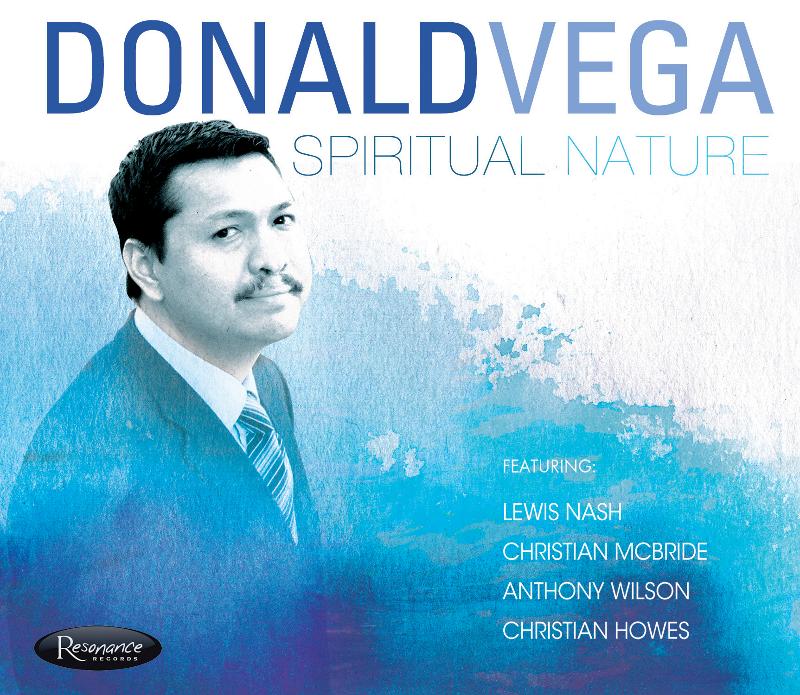
Pianist/composer Donald Vega blends jazz, classical and Latin influences on “Spiritual Nature”

While pianist Donald Vega is beginning to draw attention in jazz circles as Mulgrew Miller’s successor in the Ron Carter Trio, he makes a bold statement as a composer and bandleader on Spiritual Nature. Joined by the regal rhythm tandem of bassist Christian McBride and drummer Lewis Nash, Vega explores the marriage of jazz, Latin and classical music on his auspicious Resonance Records debut. 

“It’s a dream come true,” says the 37-year-old pianist in a news release regarding the opportunity to record with McBride and Nash. “Spiritually, this is my dream trio.”

 The core trio is augmented by guitarist Anthony Wilson, violinist and label mate Christian Howes, tenor saxophonist Bob Sheppard, trumpeter Gilbert Castellanos and trombonist Bob McChesney on Vega’s sophomore outing (following 2008’s self-producedTomorrows, which also featured drummer Nash).
Classically-trained in his native Nicaragua, Vega emigrated to Los Angeles at age 14 and began learning the language of jazz from mentor Billy Higgins at The World Stage and later with bassist John Clayton at the University of Southern California. Bassist Al McKibbon, a member of Dizzy Gillespie’s band of the late 1940s, subsequently took the young pianist under his wing and schooled him on the bandstand on the finer points of bebop. Vega met drummer Nash while working in McKibbon’s trio in Los Angeles. For Spiritual Nature, Vega imagined pairing Nash with bassist McBride, whom he had met in 2007 while attending The Juilliard School in New York. 

“The idea of having this tasty drummer with this killing bass player was so interesting,” he says. “But for them to get together in one place, it’s very rare because they’re both so busy. And when we finally got together, the music just played itself, like magic.”
Throughout Spiritual Nature, Vega shifts the configuration from trio to quartet to quintet, providing plenty of scintillating moments along the way. He kicks it off with the aggressively swinging, hard boppish “Scorpion,” which showcases his voicings for trumpet and sax on the frontline and also features an outstanding drum solo from Nash.

 “I love writing harmonies,” says Vega, “but most important to me is the melody. I always want it to be singable.”

 Ron Carter’s “First Trip,” which originally appeared on Herbie Hancock’s 1968 Blue Note classic, Speak Like a Child, is rendered here as a jaunty swinger underscored by Nash’s brushwork, McBride’s walking bass lines and featuring Wilson on guitar. “My attitude here was, ‘OK, Herbie’s version was so incredible, nobody’s going to do it better than that. So let’s just have some fun with it.'”
The album concludes with a loose, highly interactive trio rendition of Benny Golson’s classic ballad “I Remember Clifford” that is underscored by Nash’s signature brushwork and McBride’s contrapuntal approach to the bass. “All the other tunes on the album were heavily arranged,” says Vega, “so we wanted just one tune where we don’t have to read, we don’t have any arrangement, we just play. Benny Golson’s writing is great and we all knew this tune, so the idea was, ‘Let’s just go in and play.’ And you can hear that kind of looseness on this track.”
Backed by such a formidable lineup, Vega makes a giant leap as a composer-arranger and bandleader in his own right on Spiritual Nature.

Categories
Billie Holiday Canada education jazz Justin Time Records music new releases Ranee Lee releases vocals

Ranee Lee presents “Deep Song: A Tribute to Billie Holiday” via remastered CD

Ranee Lee is a true Renaissance woman. In addition to a career as a jazz singer that has taken her to stages in front of her fans around the globe, Lee is also a songwriter, award-winning actress, children’s book author, and jazz educator. Despite that resume, Lee actually got her start as a dancer. In an interview with Peter Kerr of The Montrealer, she said, “I was dancing with an Afro-Cuban touring dance troupe. We were in a small town in Ontario, and had to extend the length of our performance to fill the time allotted for the show. I was chosen to sing some songs with the band to fill that time, and the audience loved it!”
In the ’60’s Lee worked as a singer in Toronto while also taking up the drums and saxophone to make herself more marketable. She eventually moved to Montreal and got her on-stage big-break portraying Billie Holiday in Lady Day at Emerson’s Bar and Grill. Lee won a Dora Mavo Moore Award for her portrayal of the jazz legend, and thus the recording of Deep Song soon followed; “the mystique that is Billie Holiday is akin to the free spirit of a summer breeze blowing in many directions, sometimes disturbing, often refreshing, always beguiling. 

The allure of her music washes over you and touches your soul,” reflects Lee in a news release.
Deep Song is Ranee Lee’s tour de force-bringing the singer to the attention of jazz fans and concert producers worldwide for the first time. Originally released in 1989, the album has been beautifully re-mastered, and is now re-issued with two bonus tracks, “Fine and Mellow” and “Ill Wind”. Lee is celebrating 40 years in Montreal, where she has become one of Canada’s most popular jazz vocalists.
An extraordinary and captivating performer whether on the stage or on the bandstand, Lee’s sensuous melodic interpretations are complemented by her notable musician friends, including: pianist Oliver Jones, guitarist Richard Ring, drummer Archie Alleyne, and saxophonist/flautist Richard Beaudet. In addition, Lee is joined by Milt Hinton, Billie Holiday’s own bassist. Hinton writes in the liner notes, “ardent fans of Billie and listeners of all generations will enjoy the unique talent of Ranee Lee on Deep Song. It is a radiant listening experience.” The album confirms Ranee Lee as truly among the elite in jazz today.
Deep Song is comprised of jazz standards made famous by Lady Day, such as: “Easy Living” and “Strange Fruit”, (the latter, a Holiday signature protest song against racism), as well as songs Holiday had a hand in writing and have since become classics, including: “God Bless the Child”, “Don’t Explain”, and “Fine and Mellow”. The album opens with Buddy Johnson’s melancholy “I Wonder Where Our Love Has Gone” before transitioning to the jaunty step of “When a Woman Loves a Man” and continuing to cover the breadth of Holiday’s landmark career. Throughout, the power and sensuality of Ranee Lee’s perfectly articulated melody lines deftly honor her predecessor.
Preserving Lady Day’s essence while delivering an experience unique to Lee, All Music Guide’s Scott Yanow said of Deep Song that, “Lee manages to recapture Holiday’s spirit without resorting to mimicry. This tasteful effort has among its highlights ‘When a Woman Loves a Man,’ ‘Crazy He Calls Me,’ ‘Easy Living,’ and ‘Them There Eyes.’ Recommended.” Notable Washington City Paper writer Joel E. Siegel, who also won a shared 1993 GRAMMY® Award for “Best Album Notes” on a Billie Holiday box set, has an ear for Lee’s sound-“Brooklyn-born, Montréal based Ranee Lee retains traditional virtues that most contemporary, jazz-oriented singers, have abandoned: professionalism, humor, discipline, unpretentiousness.”
In addition to the accolades of Deep Song, Lee has made strides in all of her endeavors in the subsequent decades. She wrote, produced, and performed in Dark Divas, a musical and double CD release that celebrates several of the most prominent black female singers of the century, such as Ella Fitzgerald, Dinah Washington, and Sarah Vaughan; has acted alongside Billy Dee Williams in “Giant Steps”; hosted the television show “The Performers” on BET in the U.S. and BRAVO in Canada; and wrote and illustrated the children’s book Nana What Do You Say? Inspired by her song of the same name off of the 1994 album, I Thought About You. That album was also the first to be nominated for a Juno Award in the Best Mainstream Jazz Category.
In recognition of her unparalleled musical talent, Lee won the prestigious Juno Award forBest Jazz Vocal Album of the Year, for 2010’s Lives Upstairs, and continues to accumulate well-revered awards and declarations. She was inducted into The Order of Canada, the country’s highest civilian honor, and was given the ACTRA Award of Excellence for Lifetime Achievement. In 2010, Lee received a MECCA nomination for her performance in the Black Theatre Workshop production of “Swan Song for Maria.”
As an educator, Lee has been on the faculty of The Schulich School of Music of McGill University for nearly 40 years, and has also contributed her expertise and talents at The University of Laval in Quebec City for nearly a decade. McGill honored Lee’s contribution to the development of their jazz program with a prestigious award of appreciation in 2007; she also won the International Association of Jazz Education award in 2004.
Ranee Lee has released 10 albums on Justin Time Records, and throughout her career has performed alongside the likes of: Clark Terry, Terry Clarke, Bill Mayes, Herbie Ellis, and Red Mitchell. Lee and her quartet will be performing Deep Song: A Tribute to Billie Holiday at festivals and various venues beginning in mid June.


Categories
competition Detroit Jazz Festival holidays jazz labor day weekend music United States

Detroit Jazz Festival announces national jazz competitions

As part of its mission to foster and support jazz throughout the country, the Detroit Jazz Festival is now accepting submissions for two national competitions – saxophone performance and jazz arrangement – that will be judged by prominent jazz artists and educators, with prize money totaling $5,000 and the chance to perform at the Detroit Jazz Festival on Labor Day Weekend, August 31 through September 3.
The Detroit Jazz Festival’s JC Heard Jazz Big Band Arranging Competition and Jazz Saxophone Competition are the first of the annual competitions designed to highlight a specific jazz composer and celebrate the artistry of the saxophonist and arranger by encouraging new works from young talent throughout the U.S.
“The inaugural jazz saxophonist and arrangement competitions help seek out talented artists that deserve recognition,” said Chris Collins, artistic director of the Detroit Jazz Festival, in a recent news release. “It is important to help new and emerging artists establish a presence in the jazz world and continue developing their talents to hopefully become a permanent fixture. One of the definitive goals of jazz artists is to develop a highly individualized voice, and a goal of the festival is to positively contribute to jazz music and culture. This is one way we can merge these goals and make a difference.”
Arrangers will be asked to choose a composition from a significant jazz composer’s body of work, determined by the festival, and create an original arrangement for a designated ensemble. For the 2012 competition, individuals – 35 years and younger – are invited to arrange a Wayne Shorter composition of their choice for big band instrumentation with a featured soloist. Judges will include Collins; Terence Blanchard, 2012 Artist in Residence; Ellen Rowe, director of jazz studies, University of Michigan; and Russ Miller, department of jazz studies, Wayne State University. One grand prize winner will receive $1,000 and have the opportunity to see their arrangement performed at the Detroit Jazz Festival by the Detroit All-Star Big Band and a guest soloist. Two finalists will also be awarded with $500 each.
The jazz saxophonist competition seeks to recognize and provide performance opportunities to outstanding jazz saxophonists 32 years of age or younger. Applicants are asked to provide three tracks featuring a saxophonist with a rhythm section. Three finalists will be selected and scheduled to appear in Detroit to perform at the Dirty Dog Jazz Café on August 9, 2012, and at Cliff Bell’s Jazz Club on August 10, 2012. A panel of judges, including Blanchard, Collins and acclaimed Detroit saxophonist George Benson, will select the grand-prize winner and finalists. The winner will be awarded $2,000 and will be scheduled to perform a set at the Detroit Jazz Festival with the Detroit Jazz Festival All-Star Quartet. In addition, two finalists will be awarded $500 each.
“We are continually looking for the best ways to celebrate the jazz culture and its artists,” said Gretchen Valade, chair of the Detroit Jazz Festival Foundation board of directors. “The launch of these competitions, combined with the festival’s other efforts, provide a great foundation for developing future jazz talent. The festival has always been dedicated to acknowledging the importance of jazz within our communities.”
In addition to the events on Labor Day weekend, the Detroit Jazz Festival organizes year-round cultural and educational efforts, like the JC Heard Jazz Week@Wayne and the poetry slam series, to cultivate jazz in the community.
Artists can submit their applications online or by mail. 
To apply for the Jazz Saxophonist Competition, visit http://www.detroitjazzfest.com/artistsaxophone.html–submission deadline is July 15.
To apply for the Arranging Competition, visit http://www.detroitjazzfest.com/artistsjcheard.html–submission deadline is August 1.
To mail an entry, download an application at http://www.detroitjazzfest.com/artistsubmission.html and send the completed form and score to: Detroit Jazz Festival, ­
19900 Harper Ave.,
Harper Woods, Mich. 48225
(Attn: Sax Competition or Arranging Competition, respectively).
Finalists must submit copied parts by August 15.
Categories
Abiah jazz Jeremiah Abiah Life as a Ballad music new releases New York pop Rochester United States

Singer-Songwriter Abiah releases “Life as a Ballad” on August 28

Photo credit: Matt Furman

Ever since the untimely departure of Luther Vandross, the American pop scene has been absent of a Black American male balladeer possessed of chops beyond belief, staunch lyricism and emotional maturity. Abiah (pronounced Ah-bee-yah) more than adequately answers the call of that absence with an album and a presence that is sensuous, soulful, honest, grown-up and quite passionate about restoring vocal excellence to the contemporary airwaves.

Who is Abiah? These are the bare facts: he is a seasoned balladeer possessed of a five-and a half octave range; an established vocal coach and former Universal Republic recording artist; and he is of Ghanaian, Cuban, Native American descent, though raised in Rochester, NY.

While that background remains a part of his roots and identity, 2012 marks a musical, professional and personal evolution for the singer-songwriter. Previously known as “Jeremiah” in the music world (full name Jeremiah Abiah, the latter of which means ‘God is my father’), Abiah sets forth his highly anticipated sophomore album, Life as a Ballad, reflective of a long journey towards his intensely personal sound and overall musical growth – consisting of nine self-penned originals.

Growing up in a musical home – his mother an accomplished concert pianist – induced a love for learning about the nuances of the singer’s art and craft that found him studying at the Eastman School of Music as a young teen where he studied with legendary chanteuse Renee Fleming’s mother, Patricia Alexander. Afterwards came enrollment at Syracuse University and The New England Conservatory for operatic training. Abiah‘s pre-undergraduate obligations were completed while on the road, where he quickly found work as a backing vocalist for George Michael and while in college he also landed a steady gig with Yolanda Adams.

“There was a moment when I thought I had lost my voice. “I was experiencing growing pains which were hard to decipher at first but eventually they helped me to trust my heart, sound and aesthetic again. I thought I would never record again. I even toyed with the idea but the music perpetually tugged at me. Changing my stage name was the impetus of a new beginning,” says Abiah in a news release. “This is how Life as a Ballad was born as I dealt with the idea of finding beauty in the dark, that glimmer of light when all hope seemed lost.”


A move to New York City in the early 2000s saw Abiah “hitting the pavement hard” and eventually playing Central Park SummerStage and the world renowned Blue Note on a regular basis; though a turning point came when Abiah started gaining the attention of major labels. As is frequently the case for ambitious but not yet quite industry-savvy young artists, Abiah‘s fledgling recordings fell through the cracks. An entire album, brought to the verge of a major label deal, got shelved because the song the major label executives favored most was the only one not produced by a very major and deservedly much lauded producer.

“I’m not opposed to major labels. I just believe an artist needs to keep his finger on the pulse of everything. It’s hard to be artist and business, but it is necessary,” says Abiah. “Initially I was angry and came out pointing fingers, but the healthier aspect became, what did or didn’t I do? Taking that responsibility has given me power and greater perspective.”

This recording is the result of Abiah‘s steady and patient march over a decade in New York, finding the perfect songs and session mates to support his vision. Like any astute young artist in pursuit of a unique bespoke career path, Abiah wisely sought out collaborators who were of highly skilled and veteran pedigrees, and of course, simpatico. Notable among those collaborators are very well regarded young pianist Robert Glasper, who is Abiah‘s cousin who he met in earlier days while they cut their musical teeth in the New York’s music landscape. Marvin Sewell, the album’s stellar guitarist, has been a frequent flyer in Cassandra Wilson’s ensemble since the late 1990s as well as Jack DeJohnette.


Categories
Detroit Hot Club of Detroit jazz Michigan music new releases releases United States

Hot Club of Detroit expands its horizons with “Junction,” available Aug. 14

Hot Club of Detroit. Photo credit: Anna Webber

Following up It’s About That Time, Night Town and the eponymous 2006 debut Hot Club of Detroit – Hot Club of Detroit expands its sonic and compositional horizons with Junction. Retaining its original lineup of reeds, two guitars, accordion, upright bass and no drums, this is the band’s fourth release for Mack Avenue Records. There are personnel changes, however, and for the first time, the Hot Club of Detroit is joined (on three tracks) by a vocalist: French musician Cyrille Aimée, a native of Django Reinhardt’s hometown and third-place winner of the 2010 Thelonious Monk International Vocal Competition.
Junction’s sound is at once vintage and boldly new, rooted in the legacy of Django Reinhardt but also the sensibilities of Ornette Coleman, Pat Metheny, John Zorn and even the rock band Phish. Far from a traditional gypsy jazz ensemble, Hot Club of Detroit (HCOD) proves itself a versatile modern jazz group, with a unique acoustic-electric sound that surges past expectations and genre boundaries.
“A lot of bands that model themselves after the Hot Club of France are now working with drummers, or percussion of some sort,” says HCOD rhythm guitarist Paul Brady in a news release. “We never have. And by doing that it forces us to think creatively about what we can do without it. How can we approach odd meter, how can we approach certain grooves? Regardless of what a drummer can add, that absence to me is interesting and different.”
Unfortunately, Junction comes at a difficult time. HCOD bassist Andrew Kratzat and his fiancée were both seriously injured in an auto accident in July 2011, and are currently on a long road to recovery.
“This album is a dedication to both of them,” declares Brady. “It’s been tough for us, musically but also emotionally,” adds HCOD accordionist Julien Labro. “Andrew is like a brother, a family member. But we’re still hopeful, and one day I’m sure he’ll be back to playing.”
Honoring Kratzat’s example, bassist Shawn Conley brings stellar musicianship to Junction. Another new face is saxophonist Jon Irabagon, winner of the 2008 Thelonious Monk International Saxophone Competition and member of the acclaimed punk-jazz quartet Mostly Other People Do the Killing. Andrew Bishop, also on reeds, makes appearances on three tracks, increasing the band’s power and timbral variation. (Family obligations required Carl Cafagna, the group’s original saxophonist, to step aside.)
Different sounds coming together, band members collaborating from different cities: all of this makes Junction the perfect album title. “It’s a nice mix of pop-oriented material and also rather avant-garde stuff,” Brady concludes. “I remember an interview with Marc Ribot, my favorite guitarist in the world, talking about how avant-garde and pop have a lot of crossover, and even some of the musicians are the same people, like Marc himself. It made total sense to me, and it came into my mind while preparing this record.”
 Perri concurs: “We’ve always believed that if Django Reinhardt were alive today, he wouldn’t play the same way he always did. In his short lifespan, you can see how much evolution and vision he had. To pay tribute to him is to continue pursuing our own ideas.” 
Categories
BLAC Inc. Black Liberated Arts Center Inc. Charlie Christian International Music Festival jazz music Oklahoma Oklahoma City world

27th annual Charlie Christian International Music Festival kicks off in Oklahoma City on May 29

Charlie Christian

In a recent news release, Anita Arnold, executive director of Black Liberated Arts Center Inc. in Oklahoma City, said, “The 27th annual Charlie Christian International Music Festival promises to be full of nostalgia, great music of many genres, food, arts and crafts and so much more. The event will be spread out in four different venues.”


The festival kicked off at 8:30 a.m.Tuesday, May 29, 2012, at the Oklahoma City Council Chambers at 8:30 a.m. with the Morris McCraven Trio setting a jazzy atmosphere for the festival. Mayor Mick Cornett officially proclaimed this week as Charlie Christian Festival week (May 29 through June 3, 2012). Urban Roots, located in the heart of Deep Deuce featured at 6 p.m. music, the opening of the Deep Deuce Photo Exhibit and a book signing by Anita G. Arnold, author of “Oklahoma City Music: Deep Deuce and Beyond.” 


On Wednesday, May, 30, Douglass High School is the venue for the Frederick A. Douglass High School Band program, which includes a performance by the award-winning Douglass
band, acknowledgement of those who contributed to the band drive to outfit a 100-piece marching band, and a special exhibit of the school’s fine arts department during its hey day from the 1940s through the 1950s. The Oklahoma History Center is the curator of the exhibit that will include a saxophone from the 1940s belonging to Jack Washington, photos of bands, choirs, choruses, sheet music and more. 


Arnold said, “It is time to reclaim our excellence and history. These two exhibits acquaint young and old with a golden period in the African American experience.” The free event is open to the public and opens at 1:00 p.m.


At 6 p.m. Thursday, May 31, there will be jamming across Oklahoma City as musicians and singers sit in with bands at Woody’s Sports Bar and Grill and Urban Roots. Musicians are admitted free and are invited to jam with the house band as their admission to the event. Everybody else pays $5 at the door. The public is invited to come out and check it out.


The outdoor festival on Friday, June 1 and Saturday, June 2 begins at 6 p.m. at the Metro Technology Amphitheater, 1900 Springlake Drive. Reality and the New Era opens the festival on Friday with follow-up artists Equilibrium, Billie Jeane and the Robert Banks Band. Popular group After Five Jazz will headline and close out Friday night’s big fun in the park. This will be the first appearance of the group since the mid-1990s when the group went on to other things. Congo Drummer Tre Balfour of Palmdale, Calif., will join soul mates drummer Walter Taylor, keyboardist David Carter, and guitarist Maurice as they bring back their heart wrenching, top tapping sound that landed them gigs, backing artists such as Lala Hathaway and opening for guitarist George Benson, among others.


On Saturday, June 2, Miss Cooki, noted for her distinct vocals, will open and insure a memorable experience. Spencer Brown and The Dudes follow and set the stage right for Jeremy Jackson and Sultry Sound. The fresh new sounds in this year’s festival flow right into the smooth jazz sounds of Tulsa saxophonist Grady Nichols, who opens for headliner Jeremy Thomas Quartet. Thomas recently returned from touring with David Sanborn. Thomas is, the drummer for two-time Grammy Award nominee and world renowned jazz organist Joey Defrancesco. Thomas will leave on two tours in June and is scheduled for a Jazz Cruise next year. 


Doors open at 5:30 p.m. for both days. Attendees are encouraged to bring blankets, lawn chairs or comfortable seating. No food or beverages will be allowed through the gates.


At 5 p.m. on Sunday, June 3, at Frederick A. Douglass High School Auditorium, the Rev. Dr. A. Cortes Rex will be featured in a gospel show, “A Tribute to James Cleveland.” Rex, who was influenced by Cleveland, the late founder of the Gospel Music Workshops of America, will narrate and sing during the tribute. Rex was born in Wichita, Kan., but grew up in Tulsa. He lives in California, where he as been a resident since graduating from Langston University. Rex has established a reputation with two of his most popular shows that pay homage to James Cleveland and Dr. Martin L. King. 


Tickets are on sale for the show and the outdoor festival at Charlie’s Jazz, Rhythm and Blues Store, Guestroom Records, Hopkins Haircare, Learning Tree Toys and Books and Woody’s Sports Bar & Grill. The Charlie Christian International Music Festival is sponsored by BancFirst, Oklahoma Arts Council, City of Oklahoma City, Oklahoma Natural Gas Co., Oklahoma Gas and Electric Co., EMSA, Friends of the Historical Society Archives, and Tinker Federal Credit Union. This is a BLAC Inc. production.


Charlie Christian International Music Festival Band Line Up


Friday, June 1, 2012


6 – 6:45 p.m. Reality and the New Era


7 – 7:45 p.m.  Equilibrium


8 – 8:45 p.m. Billie Jeane


9 – 9:45 p.m.  Robert Banks Band


10 – 11:15 p.m. After Five Jazz


Saturday, June 2, 2012


6 – 6:45 p.m.  Miss Cooki


7 – 7:45 p.m. Spencer Brown and the Dudes


8 – 8:45 p.m. Jeremy Jackson and Sultry Soul


9 – 10 p.m. Grady Nichols Band


10:15 – 11:30 p.m.  Jeremy Thomas Quartet

Categories
believe jazz Motema Records music new releases releases the cookers United States

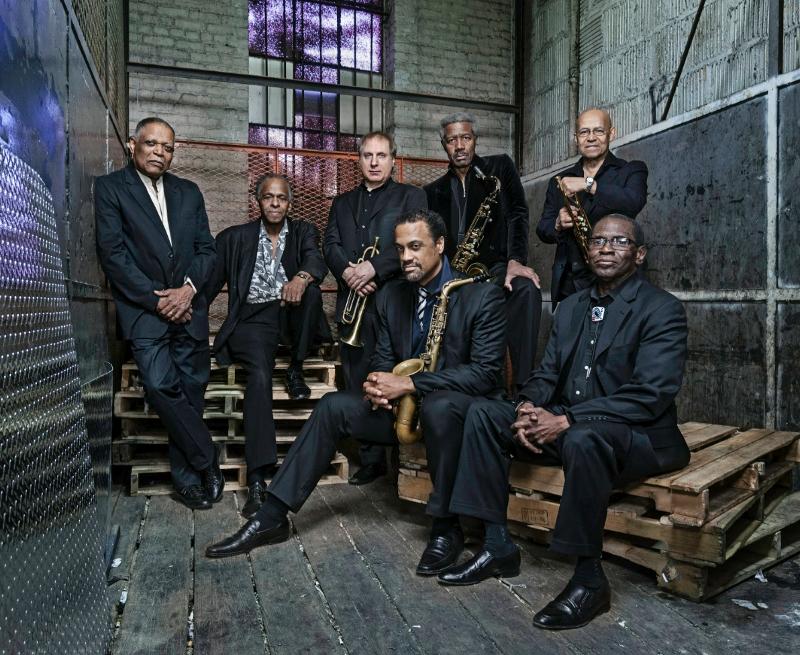
The Cookers celebrate fifth anniversary with third release “Believe,” available on June 12

The Cookers. Photo credit: Vincent Soyez


In an interview, drum great Billy Hart summed up his attitude toward The Cookers succinctly but emphatically: “Believe in us,” he insisted (tacking an expletive onto the end that served to press the point home). Over the course of two albums, The Cookers have given jazz audiences plenty of reason to believe, and their Motéma Music debut, bearing the simple but eloquent title Believe, finds the all-star septet continuing to keep the faith in swinging fashion – their third release, celebrating their fifth anniversary as a working ensemble.

The credentials of these seven musicians are beyond reproach, but simply gathering a group of legends and throwing them into a recording studio isn’t necessarily a recipe for success, points out David Weiss, the band’s founder, chief organizer, and trumpeter. 

“A lot of basketball teams throughout the years have signed a group of all-stars and assumed they would win it all because they had assembled the best group of players imaginable and in the end lost because they never really considered that the group would not gel and could not play together,” Weiss points out by way of illustration. “You can’t just put a bunch of names together and expect it to be great. These guys just turned out to be the perfect combination.”
It’s impossible to foresee how any ensemble will gel until the first notes are played, of course, but The Cookers had an inherent advantage in the fact that these legendary jazzmen had all proven themselves integral components in great bands of the past. Harper was a member of groups led by Lee Morgan and Max Roach and served a two-year stint with Art Blakey’s Jazz Messengers; trumpeter Eddie Henderson and drummer Billy Hart were both part of Herbie Hancock’s electric Mwandishi ensemble; pianist George Cables played alongside Dexter Gordon and Art Pepper; and bassist Cecil McBee anchored Charles Lloyd’s famed 1960s quartet with Keith Jarrett and Jack DeJohnette.
“This is a band,” Weiss says, emphasizing the fact that the unit has cohered into something that transcends its all-star status. “But it’s a band of guys who have been in a lot of the most important bands in the history of this music. They know what it’s like to be in a band and what makes bands great.”
The line-up is completed by Weiss and altoist Craig Handy, players from a later generation who nevertheless follow in their bandmates’ fiery footsteps. The name comes from the Freddie Hubbard’s classic two-volume album Night of the Cookers, classics featuring Lee Morgan, Harold Mabern, James Spaulding, Pete LaRoca, Big Black, and Larry Ridley. These Cookers approach their material in the same sense of adventurous exploration as Hubbard and his ensemble did, generating brilliant music out of seemingly basic elements.

Like their previous two critically acclaimed releases, Cast The First Stone (Plus Loin, 2011) and Warriors (Jazz Legacy Productions, 2010), Believe consists almost entirely of music written by the band members themselves, culled by Weiss from throughout their storied careers.

“Once you get these guys together and really see what they can do,” Weiss says, “you see that they’re not truly being recognized. They have direct ties to all the music that everybody, even younger people, came to this music listening to. They were part of what made jazz what it is and the classic records that attract most people to jazz, the greatest era of this music. Let’s not forget where this thing came from and why it was so good: it’s exciting music played with compassion and conviction and intensity. That’s what these guys are doing.”
It’s that urge, to recognize and celebrate these tremendous artists while they continue to create at the height of their powers, that inspired the band to distill Hart’s directive down to that one single word: Believe.
“It’s a simple word for a philosophy,” Weiss says. “Just believe in something. Care about something. And since you have this record in your hand, believe in this.”  

Categories
Anita Arnold BLAC Inc. Black Liberated Arts Center Inc. Bonham books Deep Deuce jazz music Oklahoma Oklahoma City Texas United States

BLAC Inc. director Anita Arnold receives Charlie Christian Tribute in Texas

Anita Arnold, right, receives framed Tribute to Charlie Christian.

During an evening of celebration and tribute to Charlie Christian in Bonham, Texas, Anita Arnold, executive director of Black Liberated Arts Center (BLAC), Inc. of Oklahoma City, OK, was presented a framed Tribute to Charlie Christian made from the wood of the house where the jazz legend was born. 


The tribute contained the words to the song “Rose Room” that launched Christian’s career with Benny Goodman and, ultimately, led to his iconic stature in the music world. A picture of Charlie Christian and his birthplace are, also, included in the tribute that sold for $1,000 in an auction and was donated by the owner of the piece.


The evening was filled with Charlie Christian music played by the James Deering Quartet of Grayson College. The talented guitarist, Seve Mexia, featured in the quartet played music that he transcribed from music played from Charlie Christian CDs as a final test from his jazz music professor at the college. Arnold narrated the concert with little-known information about Charlie Christian throughout the evening. The evening concluded with a book signing by Arnold, author of the book, “Oklahoma City Music: Deep Deuce and Beyond.” 

Categories
Aaron Diehl jazz Mack Avenue Records music new releases releases United States

Pianist Aaron Diehl debuts project on July 31 on Mack Avenue Records

In fashion circles, the adjective “bespoke” denotes custom-made suits and shirts and signifies the person who designs and constructs them. On The Bespoke Man’s Narrative, his brilliant Mack Avenue Records debut, pianist Aaron Diehl extrapolates this notion to matters of musical invention.
“The idea for the metaphor was that the composition and concept were specifically for these musicians,” Diehl says in a news release, referring to his working quartet of 30-ish all-stars – vibraphonist (and Mack Avenue artist) Warren Wolf, bassist David Wong and drummer Rodney Green – that interprets the five originals and five arrangements comprising the program. “There’s a sequence, an arc, a beginning, middle and end. Each piece has something to do with my musical development.”
The project gestated in April of 2011 in Indianapolis after Diehl, 26, earned first place in the rigorous Cole Porter Fellowship in Jazz Competition of the American Pianists Association. The award garnered him $50,000 in career support and an opportunity to record with Mack Avenue Records.
“I thought it would be wise to use the opportunity to document this ensemble,” Diehl states. “I decided to compose and arrange music in line with our own sound and conception, while using the strategies of bandleaders like John Lewis and Duke Ellington, who developed their music in line with the abilities of their personnel.”
Diehl is singularly positioned within his generation to apply these lessons to a contemporary context. An alumnus of Todd Stoll’s Columbus (Ohio) Youth Jazz Orchestra, which specializes in performing a broad timeline of Ellington’s music, he spent the last six months of his sophomore year at Juilliard – he was 19 at the time – helping pianist John Lewis’ widow, Mirjana, to organize her late husband’s archive of manuscripts, scores, reel-to-reel tapes and recordings. Already intimate with the stride piano canon from his teens, Diehl applied the quality time with Lewis’ Bach-to-blues oeuvre towards finding a conceptual space in which to coalesce his varied interests.
This quartet initially took shape in 2008 – then with drummer Quincy Davis – when Diehl was asked to play a concert of Lewis’ music. By an April 2010 performance of this repertoire at Dizzy’s Club Coca-Cola, Rodney Green had assumed the drum chair.
“Warren is a virtuoso,” Diehl says of his fellow Mack Avenue artist. “There couldn’t be anyone more appropriate to play the part of Milt Jackson. David is a fluid, precise player with a lot of finesse and a strong bow, who comes straight out of the bebop-based approaches of Percy Heath and Paul Chambers. Mrs. Lewis said that John would have loved him.
Aaron Diehl
Photo Credit: John Abbott
“I hadn’t realized it, but Rodney listened a lot to Connie Kay, and told me that one reason he wanted to be part of this project was to get more inside Connie’s approach.”

In preparing this program of creative refraction of the aforementioned oeuvres, Diehl focused on nurturing an ensemble sound. “Rather than feature just my piano playing, I like to involve everybody in the process,” he says. “Sharing the wealth allows for more musical possibilities.”
For all his collective orientation, Diehl commands attention at the piano. Addressing a Fazioli F-228 grand piano, he showcases a nuanced touch, a comfort zone with tempos ranging from rubato to brisk, encyclopedic harmonic knowledge, an abiding sense of blues expression and a will – when necessary – to swing. He’s assimilated vocabulary across the timeline, finding fresh, idiomatic ways to mix-and-match ideas drawn from a diverse cohort including, among others, Lewis, Ellington, Ahmad Jamal, Marcus Roberts and Kenny Kirkland. As he puts it, “My overall goal is trying to figure out how to connect all the language to make an interesting and engaging performance, and also develop my own voice. Why limit yourself to just playing something here and something there? It’s all gold.”